Condo Owners: Are you aware of the financing rule change that’s coming?
If you own a condo, plan to buy one, or sit on an HOA board, a major financing rule change is coming. It’s easy to miss, and incredibly expensive to ignore.
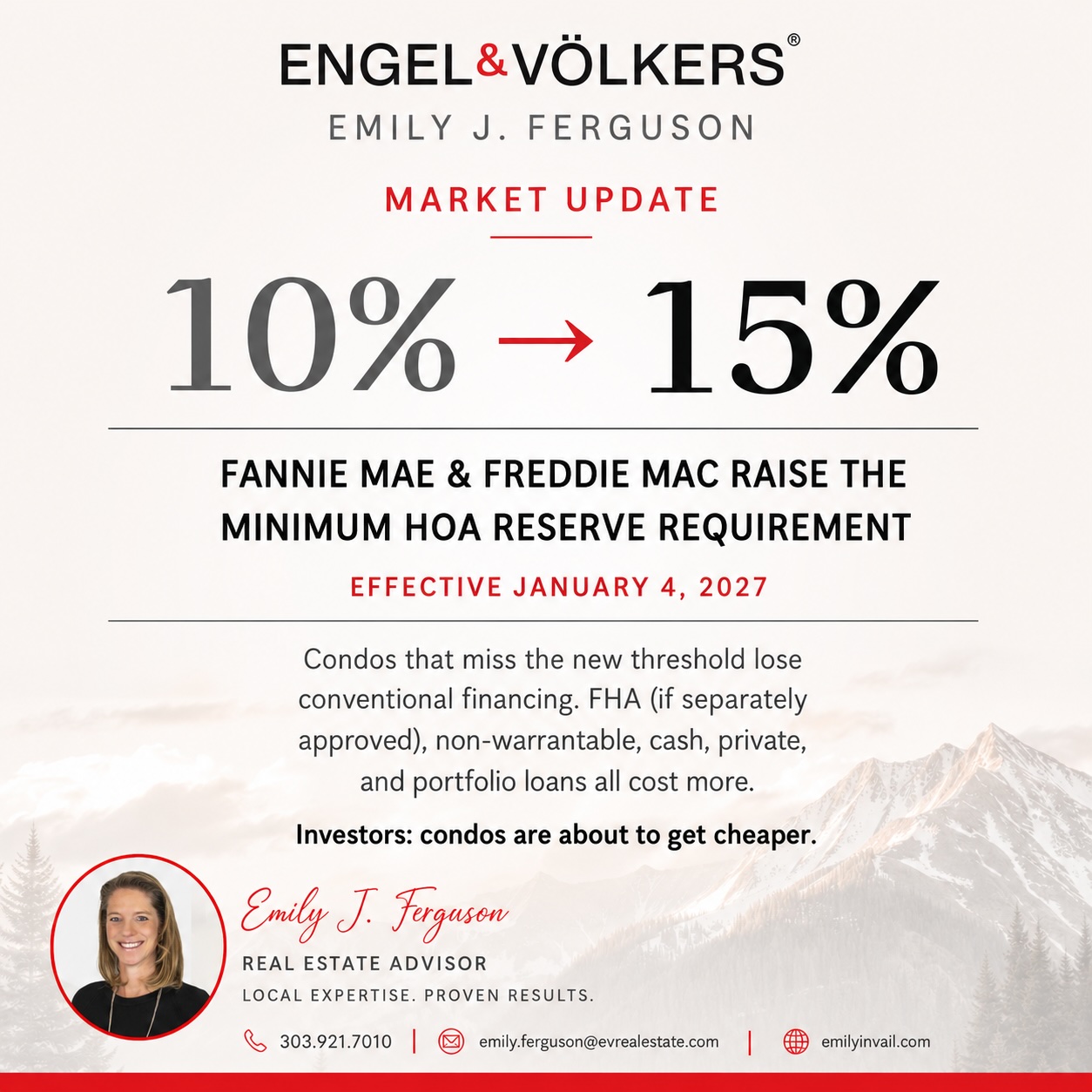
Starting January 4, 2027, Fannie Mae and Freddie Mac require condo Homeowners Associations (HOAs) to allocate at least 15% of annual income to replacement reserves. Condos failing to meet this standard risk losing their warrantable status, preventing buyers from securing conventional mortgages.
The 15% Reserve Rule Change Explained
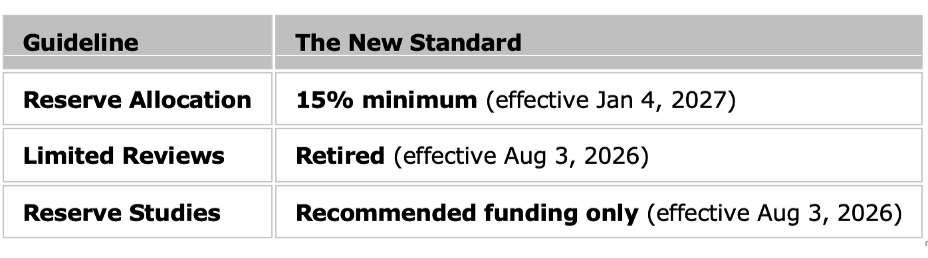
Come January 4, 2027, condo projects reviewed under Fannie Mae and Freddie Mac's "Full Review" processes must allocate at least 15% of annual assessment income to replacement reserves—a significant jump from the previous 10%. This is an official mandate, and boards must prepare their budgets now.
The narrowing exception: The 15% allocation is waived if the association has a reserve study (updated within three years) supporting a lower funding level. However, the timeline for lending compliance has already shifted.
Because "Limited Reviews" were recently retired, far more buildings now face full underwriting scrutiny right as the reserve threshold jumps.
Why Warrantable Status Matters
The trigger for these rules is the loan application date. If an HOA's reserve contribution is under 15% and lacks a qualifying study, the building loses its warrantable status.
Conventional mortgages then become unavailable for units in that building. Buyers are immediately pushed toward FHA loans (if approved), non-warrantable lenders, or cash—options that are costlier and/or harder to secure.
The Financial Impact
To maintain conventional loan eligibility, HOAs must close reserve gaps by raising monthly dues or levying special assessments. Both strategies increase homeownership costs and impact resale values.
If a building’s reserve allocation is currently below 15% and the board has no plan to increase it, treat that as a major red flag. For real estate investors, a wave of buildings losing conventional eligibility could soften local market prices, creating lucrative entry points for all-cash buyers.
What You Need To Do Now
HOA budget cycles move slowly. Getting ahead of this now prevents a total financing freeze later.
- Condo Owners: Ask your HOA what percentage of the budget funds reserves and if the building has a recent, qualifying reserve study.
- HOA Boards: Review current funding against the 15% minimum. If you lack a qualifying study, begin planning budget adjustments immediately.
- Homebuyers: Always verify a building's warrantable status before making an offer and discuss non-warrantable financing with your lender.
- Investors: Watch for buildings losing eligibility; negotiation opportunities often show up here first.
Have questions about your condo's warrantability or financing options? Call me and we’ll review your situation together: 303.921.7010
Categories
Recent Posts